


Some people, often unknowingly, are affected by the rocking movements of the boat, causing nausea and discomfort that spoil a wonderful experience at sea. If you think you might suffer from this issue, consult your doctor about taking seasickness tablets.
 Equipment also provided by us

Arriving at the Port of Baia, head to our "Subaia hub" where you'll meet the staff and begin your unforgettable experience among historical Roman artifacts. First, you'll learn some simple scuba rules from an expert instructor. Once you're ready, we'll move on to the practical part! After just 5 minutes at the dive site, you'll don your tanks, mask, and snorkel to start your underwater adventure alongside an experienced diver. Depending on the day and weather conditions, you'll have the chance to admire one or more areas of the submerged archaeological park.

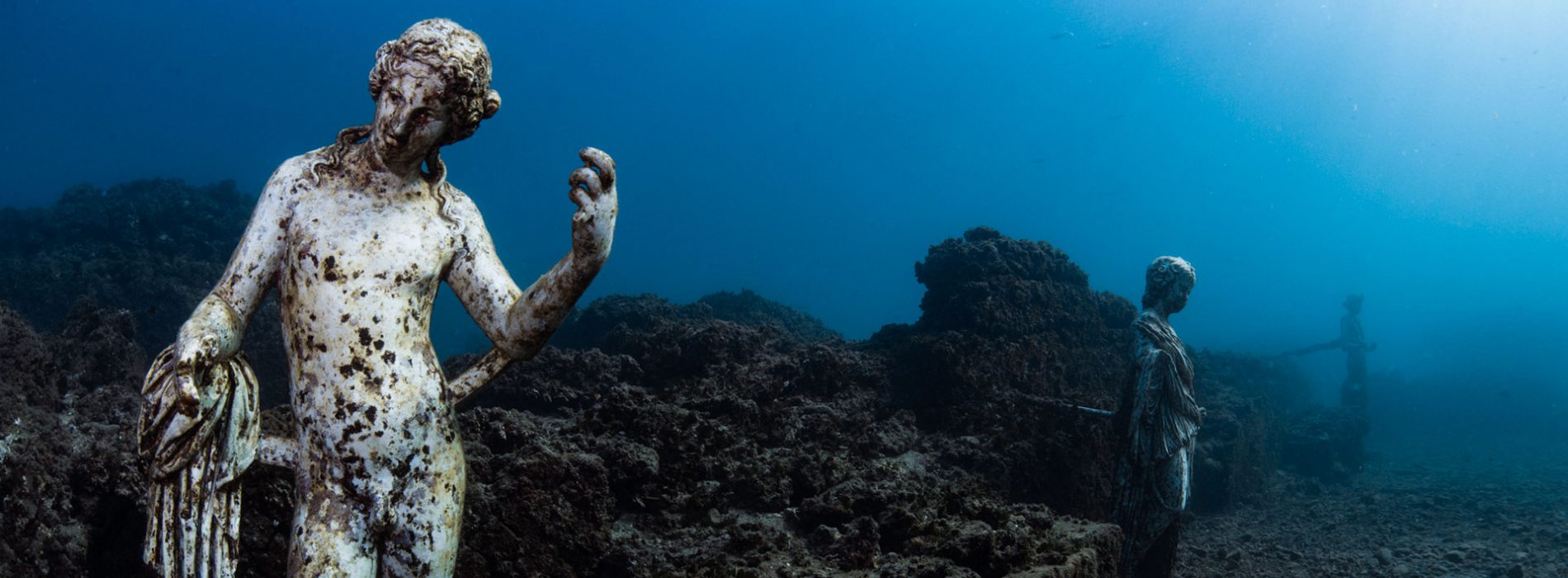
A wonderful villa once owned by Emperor Claudius, various statues were discovered in 1969, leading to more accurate research. The well-crafted statues are now housed in the Baia museum, with faithful replicas installed on-site, allowing visitors to relive the excitement of the archaeologists who first unearthed them.
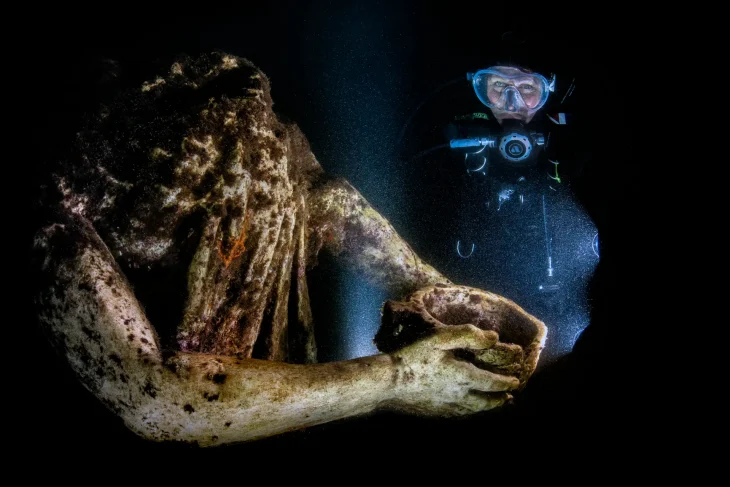
The old port of Baia was an enclosed bay (known as Lacus Baianus) with an entrance canal still visible today, alongside the remains of ancient shops and baths. Within this urban complex, the remains of a significant villa can be distinguished, featuring a "prothyron" entrance, characterized by a portico with two long masonry benches. Depth: 5 meters.

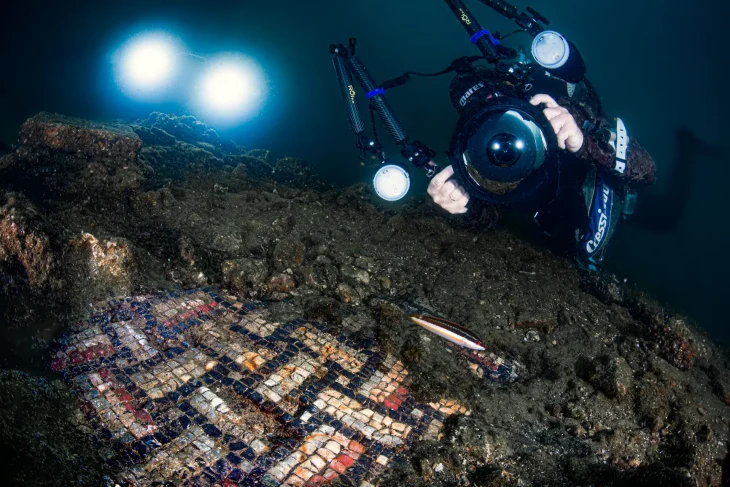
It was a thermal complex, possibly part of a private residence, overlooking the ancient port of Baia, known as Lacus Baianus. This site was recently discovered, restored, and opened to the public in the summer of 2020. It's stunning to observe the remains of polychrome mosaics and marble floors. The different levels of flooring with overlapping mosaics are particularly interesting. In addition to the outlines of various rooms and the thermal baths, three apsidal rooms can also be seen, which once had large windows overlooking the Lacus Baianus. Depth: 4 meters.
These are the remains of an imposing patrician residence from ancient Imperial Rome. Originally owned by the Piso family, the villa was confiscated by Nero after a conspiracy against him. In addition to the colonnades surrounding a vast garden and the corridors that traversed it (viridarium), the remains of a large thermal pool can be seen, while on the other side, the remains of the villa's fishpond are identifiable. Depth: 5 meters.
It was a commercially significant port, whose existence has been highlighted through aerial photographs taken by diver R. Bucher. These images showcased the topography of the vast port complex, which spans an area of about ten hectares. During the dive, numerous remains of floors, columns, and marble fragments can be observed. A distinctive feature of the site is the presence of captivating mosaics. Depth: 3 meters.
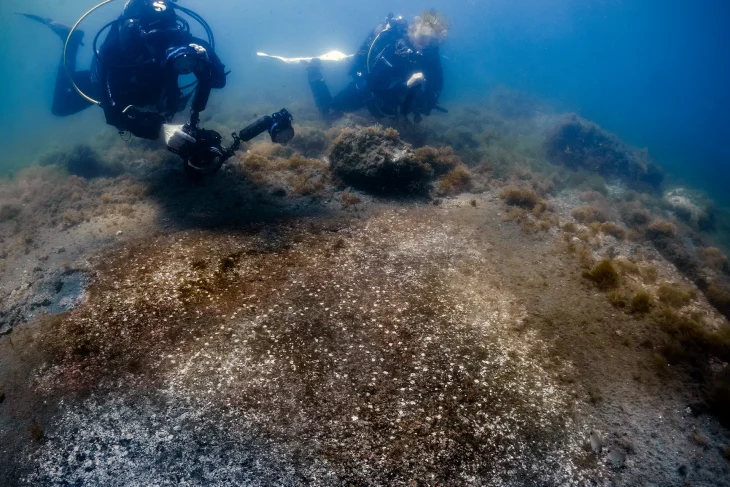
This path is located in the area adjacent to the entrance of the ancient commercial port canal. Its name comes from the numerous remains of columns and a long colonnade, made of both marble and stucco. You can observe a sequence of dozens of warehouses that once served port activities. The current structures are the result of the overlapping of multiple buildings that occurred over at least 400 years. Recent studies and investigations have revealed many floors, including a significant wave-pattern mosaic and another in two colors, which completely cover the floors of the rooms. Depth: 3 meters.

During this dive, explorers head along 12 pillars that remain from the presumed thermal structures built on a small island in front of the entrance to Portus Julius. The maximum depth reached is 13 meters, slightly deeper than other dives in the park. Navigating through these imposing structures, one can observe a variety of fascinating marine life. The presence of some fumaroles, gas emissions from the underground due to volcanic activity, makes the exploration even more intriguing. Depth: 13 meters.
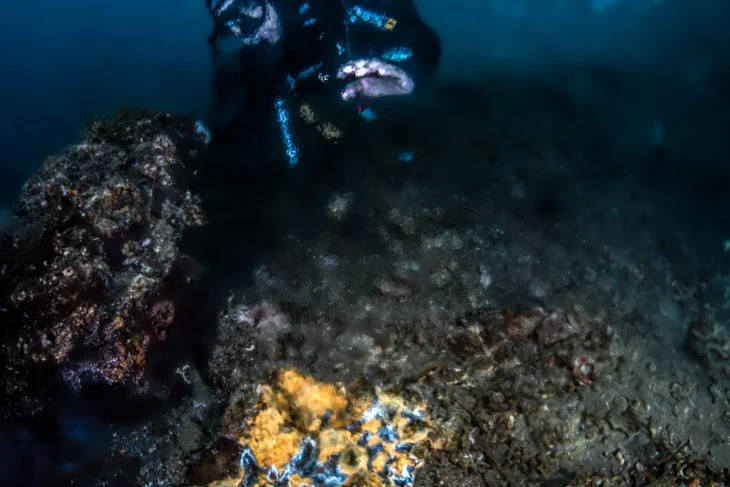
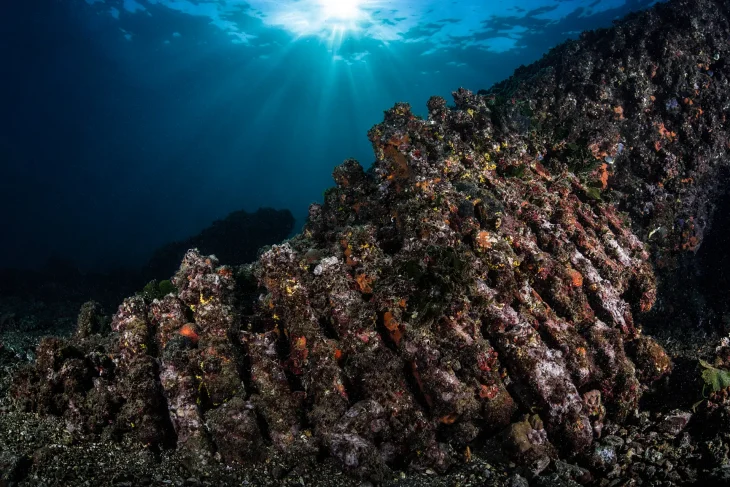
This dive site offers an interesting addition to the visit to the Villa dei Pisoni. It features the Pilae, large breakwater pillars that protected the villa from storm waves. A forest of large blocks arranged randomly, where one can dive at a slightly greater depth, between 9 and 15 meters, surrounded by lush vegetation and fish that have colonized this ancient stretch of sea. Depth: 15 meters.
Equipment also provided by us 


The highlight of our vacation in Naples!
Excellent communication from the start with Ornella, easy to book and ask questions in advance. My husband, three teenage daughters, and I booked a dive and were very impressed by the organization, the quality of the equipment, and the entire diving experience. We are five complete beginners and were very well taken care of by a professional, enthusiastic, and fun team of eight divers. They were very patient and did everything possible to ensure we got the most out of our trip. Take the train from Naples to Fusaro, it takes 40 minutes and costs just a few euros each. Great beach, warm water, and a small harbor, and the pizzas next door are a must. I highly recommend using Subaia, a wonderful experience—thank you Penelope, George, and the team.