


Some people, often unknowingly, are affected by the rocking movements of the boat, causing nausea and discomfort that spoil a wonderful experience at sea. If you think you might suffer from this issue, consult your doctor about taking seasickness tablets.
 Equipment provided by us

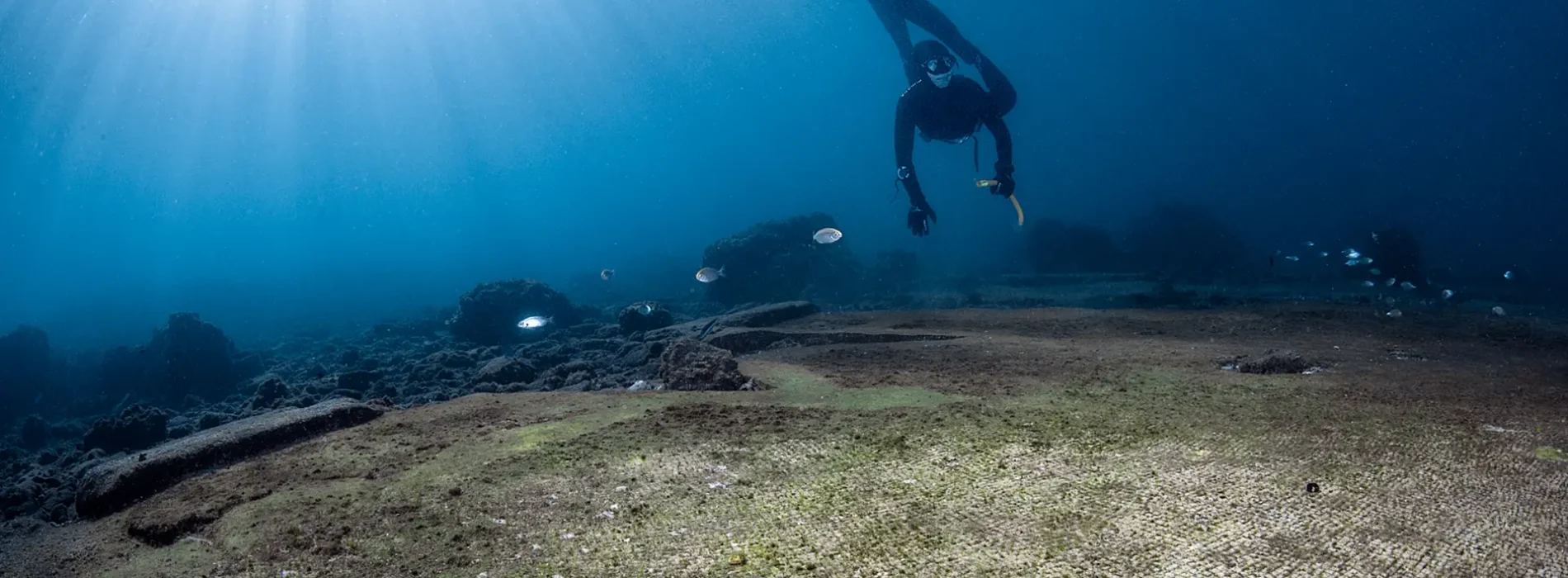
Your experience begins at our Diving center, where you can rent equipment and prepare for your guided dive! An experienced instructor will guide you stroke by stroke through the park and explain the history of the artifacts and the territory you will explore. Depending on the weather conditions, the time available, and the day, you will be able to admire various archaeological sites.
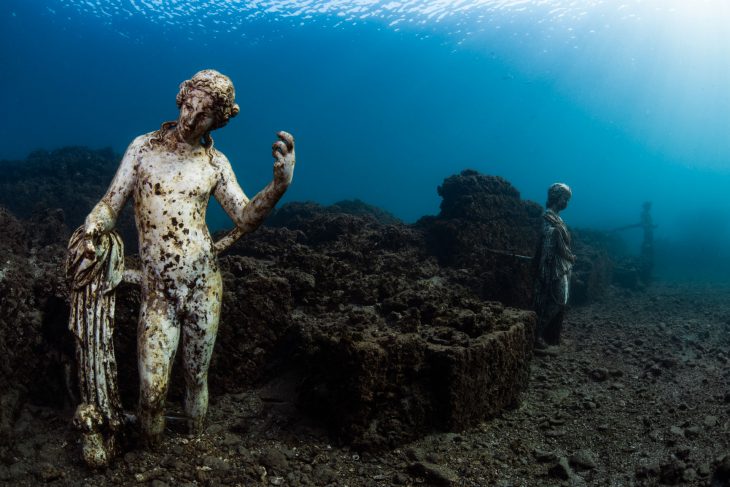
The Nymphaeum of Emperor Claudius rests underwater near Punta Epitaffio, in area A of the park, at a depth of about 5 meters. Its architecture is characterized by a rectangular shape, with a semicircular apse at the back and four niches on each long side. This structure, clearly visible beneath the water's surface, is made even more striking by the presence of reconstructions of the statues that originally adorned the niches. The underwater itinerary continues along a stretch of the extraordinary Via Herculea, which once served as access to Portus Julius. Depth: 5 meters.
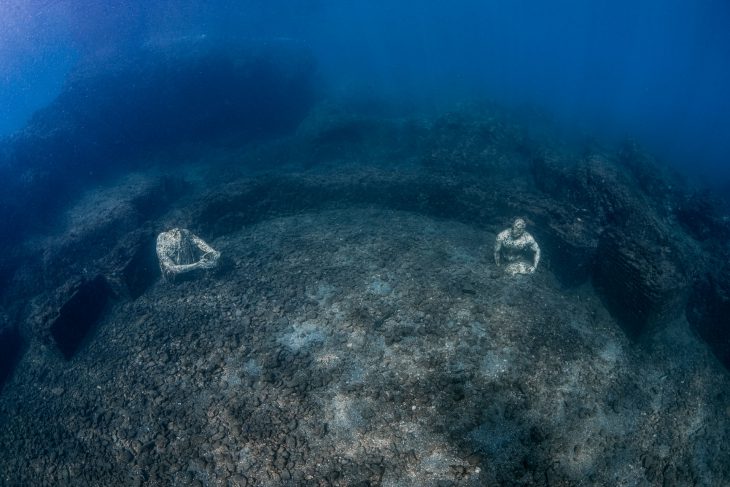
The ancient port of Baia was an enclosed inlet (known as Lacus Baianus) with an entrance channel still evident today, alongside the remains of ancient shops and thermal structures. Among the urban vestiges, the remains of a significant villa stand out, featuring an entrance "with a prothyrum," characterized by a portico with two long masonry benches. Depth: 5 meters.

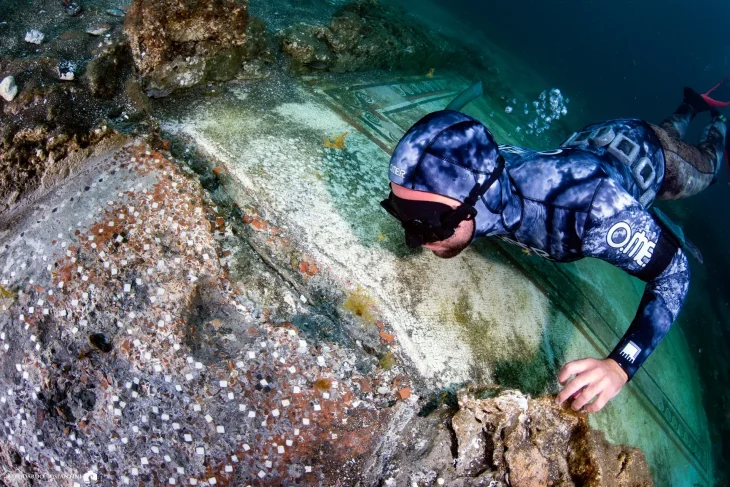
This thermal complex, possibly a private residence, overlooked the old port of Baia, the Lacus Baianus. The site was recently discovered, restored, and opened to the public in the summer of 2020. It is striking to observe the remains of various polychrome mosaics and marble floors. Notably, the different levels of flooring with overlapping mosaics are of interest. In addition to the perimeters of various rooms and the thermal baths, three apse-shaped rooms can also be seen, which once featured large windows overlooking the Lacus Baianus. Depth: 4 meters.

It was a commercially significant port, whose existence has been highlighted through aerial photographs taken by diver R. Bucher. These photos showed the topography of the vast port complex, which spans an area of about ten hectares. During the dive, numerous remains of floors, columns, and marble fragments can be observed. A distinctive feature of the site is the presence of interesting mosaics. Depth: 3 meters.

This path is located near the entrance to the canal of the old commercial port. Its name comes from the abundant remains of columns and a long colonnade, made of both marble and stucco. A series of warehouses that once served port activities can be observed. The current structures are the result of the overlap of multiple buildings that occurred over at least 400 years. Recent research has uncovered several floors, including an important wave mosaic and another in two colors, which completely cover the floors of the rooms. Depth: 3 meters.
 Equipment provided by us


The highlight of our vacation in Naples!
Excellent communication from the start with Ornella, easy to book and ask questions in advance. My husband, three teenage daughters, and I booked a dive and were very impressed by the organization, the quality of the equipment, and the entire diving experience. We are five complete beginners and were very well taken care of by a professional, enthusiastic, and fun team of eight divers. They were very patient and did everything possible to ensure we got the most out of our trip. Take the train from Naples to Fusaro, it takes 40 minutes and costs just a few euros each. Great beach, warm water, and a small harbor, and the pizzas next door are a must. I highly recommend using Subaia, a wonderful experience—thank you Penelope, George, and the team.